Abrasive Belt Backing Comparison: Paper, Cloth & Polyester for Different Working Conditions
The performance, stability and service life of abrasive belts depend largely on the backing material, rather than only abrasive grit size. Many manufacturing defects such as belt stretching, tearing, dimensional deviation, surface vibration marks and uneven grinding are caused by mismatched belt backing. In industrial metal processing, wood sanding and automated polishing, paper, cloth, and polyester backings are the three mainstream abrasive belt substrates. Each features unique tensile strength, flexibility, water resistance and dimensional stability, adapting to completely different load intensities and processing scenarios. Selecting the correct backing type according to working conditions is the key to stabilizing batch quality and reducing consumable costs.
This blog systematically compares the core properties, advantages, limitations and applicable scenarios of paper, cloth and polyester abrasive belts, summarizes targeted selection rules for light, medium and heavy-duty grinding, and solves common matching confusion in manual and automated grinding production.
1. Paper Backing Abrasive Belts: High Stability & Cost-Effective Fine Finishing
Paper-based abrasive belts adopt high-density treated paper as the substrate, with ultra-low elongation and excellent dimensional stability under high-speed operation. Compared with cloth and polyester belts, paper belts have flatter surfaces, uniform grain distribution, and effectively avoid vibration marks and wavy textures during grinding. Featuring lightweight texture, easy cutting and low cost, they are ideal for standardized light-load fine finishing. However, ordinary paper bases have poor water resistance and low tensile strength, not suitable for heavy pressure, wet grinding and repeated bending scenarios.
Core Advantages: Zero stretching, stable size, flat grinding surface, no vibration lines, high cost performance, easy to trim and cut.
Limitations: Poor water resistance, low toughness, not resistant to heavy pressure and frequent bending, easy to crack and break under heavy load.
Best Working Conditions: Manual light deburring, flat surface fine sanding, wood and plastic finishing, thin metal sheet polishing, low-pressure automated fine grinding. Suitable for batch finishing processes with high surface flatness requirements and low material removal volume.
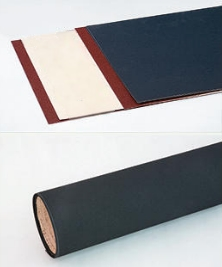
2. Cloth Backing Abrasive Belts: Flexible & Versatile Medium-Duty Grinding
Cloth-based abrasive belts take high-strength cotton or blended fabric as the substrate, with balanced toughness and flexibility. They resist tearing and stretching during operation, adapt to repeated bending and curved surface fitting, and have moderate pressure resistance and heat resistance. With strong comprehensive adaptability, cloth belts can cover most medium-load grinding scenarios, from rough trimming to fine polishing. Treated waterproof cloth bases can also meet the requirements of occasional wet grinding, making them the most versatile abrasive belt type in industrial processing.
Core Advantages: Excellent flexibility, tear resistance, bending resistance, wide applicability, balanced cutting force and surface fitting performance, customizable hardness.
Limitations: Slight elongation under long-term high tension, lower dimensional stability than paper belts, slightly higher cost than paper bases.
Best Working Conditions: Medium-load metal deburring, weld seam trimming, curved surface and special-shaped part grinding, manual and semi-automatic universal polishing, wood rough sanding and metal oxide layer removal. Suitable for multi-scene mixed processing with flexible contour fitting requirements.


3. Polyester Backing Abrasive Belts: High-Strength & Waterproof Heavy-Duty Grinding
Polyester-based abrasive belts use high-toughness polyester fiber film as the substrate, featuring ultra-high tensile strength, zero permanent elongation, and natural waterproof and moisture-proof properties. Different from ordinary cloth and paper bases, polyester belts maintain stable dimensional accuracy under high-speed operation, heavy pressure friction and long-term continuous grinding. They resist high temperature, deformation and clogging, and perfectly adapt to harsh working conditions such as wet grinding, high-load rough grinding and long-cycle automated production, with far longer service life than other substrates.
Core Advantages: Ultra-high tensile strength, waterproof and moisture-proof, high temperature resistance, zero deformation, durable wear resistance, stable performance in long-term heavy-duty operation.
Limitations: Slightly poor flexibility than cloth belts, higher cost, not suitable for ultra-fine mirror finishing with extremely high flatness requirements.
Best Working Conditions: High-load heavy stock removal, automated robotic continuous grinding, wet grinding and water-cooled polishing, thick plate rough trimming, high-speed wide-band machine processing, harsh dust and humid working environments. The first choice for high-intensity industrial batch production.
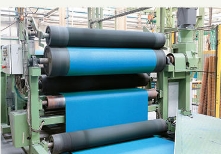
4. Quick Selection Rules for Three Types of Abrasive Belt Backings
Light-load fine finishing, flat surface, low budget → Paper Backing
Medium-load universal grinding, curved surface fitting, multi-scene mixed processing → Cloth Backing
Heavy-load rough grinding, wet grinding, high-speed automation, harsh working conditions → Polyester Backing
Conclusion
The three mainstream abrasive belt backings have clear differentiated positioning: paper belts focus on high-precision, cost-effective light finishing; cloth belts excel at flexible and versatile medium-duty grinding; polyester belts dominate high-strength, stable heavy-duty and wet grinding. Scientific matching according to actual working conditions can effectively avoid common problems such as belt stretching and breaking, surface vibration marks, inconsistent batch texture and short service life, helping manufacturers improve grinding efficiency and reduce overall consumable costs.